

In today’s fast-paced digital landscape, organizations can no longer afford to rely on legacy infrastructure. Outdated systems pose significant operational risks, from security vulnerabilities to scalability limitations. As enterprises strive to maintain a competitive edge, modernizing infrastructure is no longer an option, it is a necessity.
The Limitations of Legacy Systems
Managed DevOps is a service that offloads the operational complexities of DevOps from in-house teams to a specialized external provider. It includes end-to-end DevOps lifecycle management, covering infrastructure provisioning, CI/CD automation, security, monitoring, and ongoing optimizations.
With Managed DevOps, companies can focus on product development and innovation while leaving the operational burdens of DevOps to a dedicated team of experts.
Scalability Challenges: Traditional data centers require substantial capital investment to scale, making it difficult to meet dynamic business demands.
Security Risks: Older systems are more vulnerable to cyber threats due to outdated security mechanisms and lack of vendor support.

High Maintenance Costs: Legacy systems require constant patching, upgrades, and specialized personnel, increasing operational costs.
Limited Integration: Modern applications demand seamless integration across platforms, which legacy infrastructure often fails to support.
To remain competitive, enterprises must transition to modern, cloud-centric infrastructure.
Cloud as the Foundation for Modern Infrastructure
Cloud computing is the cornerstone of digital transformation, enabling organizations to build scalable, secure, and cost-effective solutions. Amazon Web Services (AWS) has emerged as a leading provider of cloud services, offering a robust suite of tools that facilitate modernization at every stage.
Key Benefits of Cloud Infrastructure

Scalability and Agility: Cloud platforms like AWS provide auto-scaling capabilities, ensuring that resources dynamically adjust based on demand. This eliminates the need for costly over-provisioning and allows businesses to react swiftly to market changes.

Enhanced Security and Compliance: AWS offers industry-leading security features, including data encryption, threat detection, and compliance with global standards (e.g., GDPR, HIPAA). Organizations can leverage these features to strengthen their security posture.

Cost Optimization: The pay-as-you-go model enables companies to reduce CapEx and optimize OpEx. AWS services like AWS Savings Plans and Reserved Instances allow further cost control.

Seamless Integration and Automation: Modern applications require integration with various services and automation capabilities. AWS provides tools like AWS Lambda, API Gateway, and AWS Step Functions to facilitate microservices architectures and DevOps practices.
Strategies for a Successful Cloud Migration
- Assess and Prioritize: Conduct a thorough assessment of your existing infrastructure, identifying applications that are best suited for cloud migration. Prioritize based on business impact and feasibility.
- Implement Cloud-Native Solutions: Rather than simply replicating on-premises architecture, businesses should embrace cloud-native solutions like containerization (Amazon ECS, EKS), serverless computing (AWS Lambda), and managed databases (Amazon RDS, DynamoDB).
- Prioritize Security and Compliance: Utilize AWS security services like AWS Identity and Access Management (IAM), AWS Shield, and AWS Security Hub to enforce best practices and ensure regulatory compliance.
- Optimize for Performance and Cost: Use AWS tools like AWS Cost Explorer and AWS Trusted Advisor to continuously monitor and optimize cloud expenses and performance.
Choosing the Right Migration Approach
Organizations can choose from different migration strategies, often referred to as the 6 R’s of cloud migration:
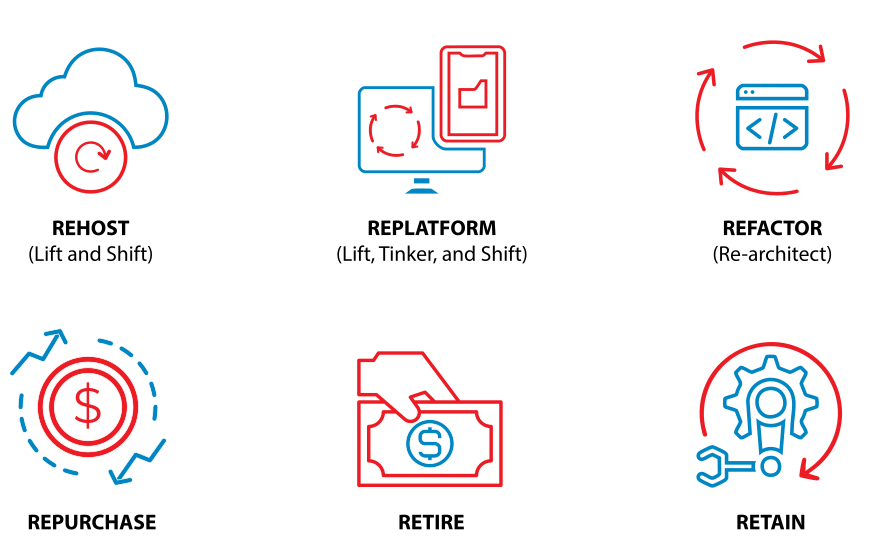
1. Rehost (Lift and Shift)
- When to use: When speed is the priority, and minimal changes are needed.
- Steps: Identify workloads, provision cloud resources, migrate data and applications, and validate functionality.
- Outcomes: Quick transition with minimal disruption, but may not fully optimize cloud efficiencies.
- Pros: Fast migration, low complexity.
- Cons: May not leverage cloud-native benefits fully.
2. Replatform (Lift, Tinker, and Shift)
- When to use: When minor optimizations (e.g., database changes) can improve performance without a full redesign.
- Steps: Analyze application components, make targeted optimizations, migrate, and test.
- Outcomes: Improved cloud efficiency with moderate effort.
- Pros: Some cost savings and performance gains, minimal code changes.
- Cons: Still retains some legacy limitations.
3. Refactor (Re-architect)
- When to use: When legacy applications need fundamental rework to take advantage of cloud-native features.
- Steps: Break monoliths into microservices, implement containers/serverless, migrate, and test.
- Outcomes: Significant cost and performance benefits but requires heavy development effort.
- Pros: Maximized cloud benefits, enhanced scalability, and agility.
- Cons: High complexity, longer timelines.
4. Repurchase
- When to use:
When a SaaS replacement can offer better capabilities than a legacy application. - Steps: Identify alternatives, migrate data, and configure the new solution.
- Outcomes: Simplified operations with reduced maintenance.
- Pros: No infrastructure management and fast implementation.
- Cons: May involve subscription costs and potential feature gaps.
5. Retire
- When to use: When an application is no longer needed.
- Steps: Assess system dependencies, decommission safely, and reallocate resources.
- Outcomes: Reduced costs and improved focus on critical workloads.
- Pros: Eliminates unnecessary maintenance.
- Cons: May impact legacy data availability.
6. Retain
- When to use: When regulatory or business constraints prevent migration.
- Steps: Maintain existing infrastructure while integrating cloud where possible.
- Outcomes: Hybrid solutions with gradual cloud adoption.
- Pros: Maintains control and phased transition.
- Cons: Ongoing operational costs and potential inefficiencies.
The Road Ahead: Future-Proofing Your IT Infrastructure
Embracing modern infrastructure is an ongoing journey. As technologies like AI, edge computing, and hybrid cloud models continue to evolve, businesses must remain adaptable. Leveraging AWS’s innovation-driven ecosystem ensures that organizations are equipped to handle the demands of tomorrow.
By transitioning beyond legacy systems and embracing modern cloud infrastructure, enterprises position themselves for sustained success—gaining agility, security, and cost-efficiency while unlocking new opportunities for growth.
How Eurus Technologies Can Help
Navigating cloud modernization can be complex, but Eurus Technologies simplifies the process with tailored cloud solutions and expertise. As an AWS partner, Eurus Technologies helps businesses assess, migrate, and optimize their cloud infrastructure, ensuring a seamless transition from legacy systems. With a deep understanding of cloud-native architectures, security best practices, and cost management strategies, Eurus Technologies empowers enterprises to unlock the full potential of AWS while minimizing operational risks.